






17.6k
Shares
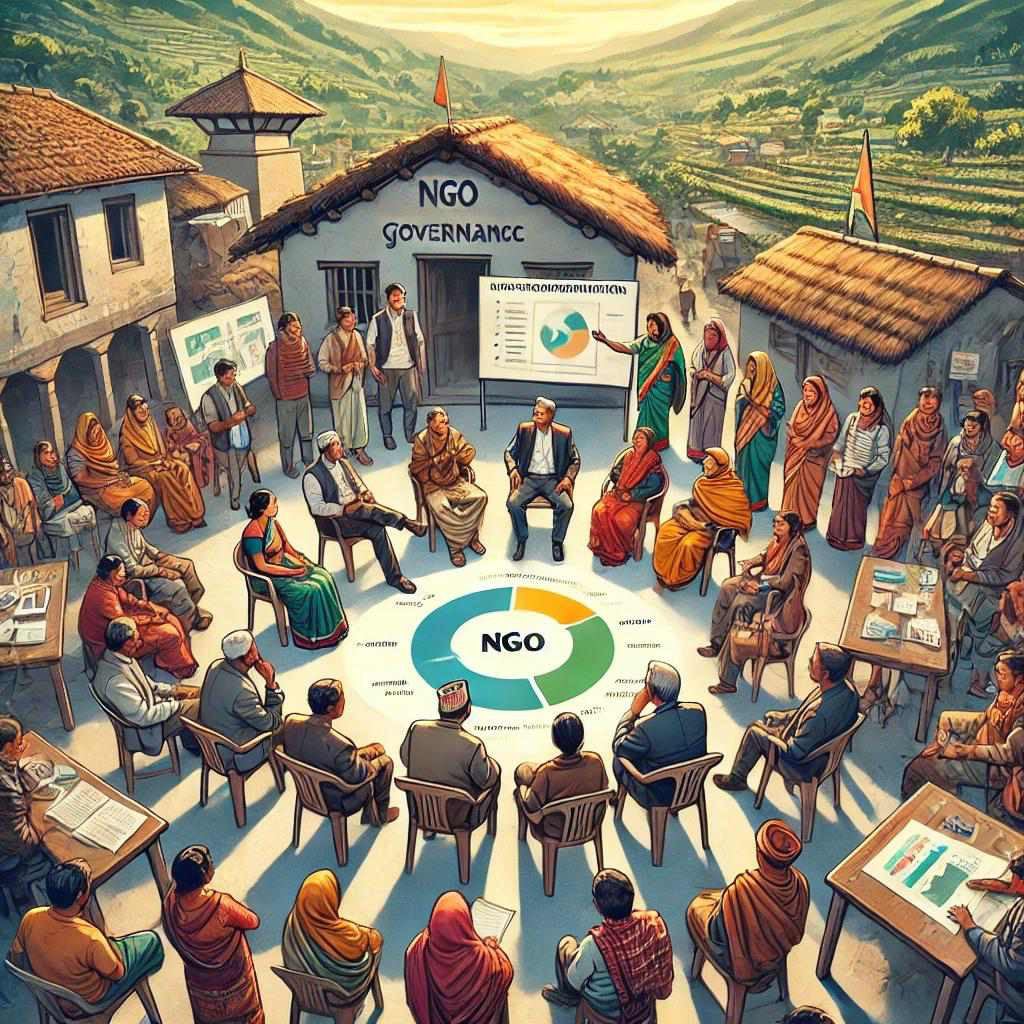
Non-Governmental Organizations (NGOs) play an increasingly vital role in Nepal's development landscape, addressing various social, economic, and environmental challenges. However, the effectiveness of these organizations hinges on how well they engage stakeholders in the planning and implementation of their projects. This research critically examines the importance of stakeholder participation in project planning and implementation, highlighting both the potential and the challenges of adopting participatory approaches in Nepal's development sector.
The Evolution of Participation in Development
The concept of participation in development has evolved significantly over the decades, reflecting broader shifts in governance and policymaking. Historically, development projects were managed through a top-down approach, with decisions being made by government agencies and state-owned organizations. This method, rooted in Max Weber's theory of bureaucracy, was prevalent during the post-colonial era and emphasized hierarchical management with little input from the beneficiaries of development projects.
However, by the 1970s, this approach came under fire for its inefficiency and lack of responsiveness. Critics from both the right and the left began advocating for alternative models of governance. The right-wing perspective called for a transfer of power from monopolistic parastatal agencies to individual consumers through market competition, while the left-wing perspective championed grassroots movements aimed at empowering marginalized communities to challenge existing power structures.
The 1980s saw a shift toward institutional and policy reform, influenced heavily by neo-market theory. Yet, it became increasingly clear that simply relying on market mechanisms was insufficient to address the complexities of development. The failures of political movements in 1989 underscored the need for more inclusive approaches, leading to a renewed focus on participatory methods. By the 1990s, participation had become not just a policy recommendation but a practical necessity, particularly in the public sector.
Theoretical Foundations of Participation
At its core, participation is about inclusion—specifically, the inclusion of disadvantaged and marginalized groups in the development process. This concept has been a buzzword in the field of development for decades, often understood as the involvement of ordinary people in decision-making processes. Robert Chambers, a key proponent of participatory development, argued that such approaches seek to shift power dynamics, enabling those who are typically excluded to gain greater control over resources and institutions.
Participation is not limited to direct beneficiaries; it also involves stakeholders with varying interests and capabilities. This broader inclusion is crucial for ensuring that development projects are both effective and sustainable. However, the success of participatory approaches in practice depends heavily on how participation is conducted. Simply involving people in decision-making is not enough—there must be genuine empowerment and a transfer of control to the community.
Challenges of Participation in Nepal
Despite the theoretical appeal of participation, its implementation in Nepal faces several challenges. One of the key issues is the limited access that ordinary people, particularly those without institutional affiliations or specialized knowledge, have to development planning processes. Research indicates that the voices of common people are often underrepresented in policy decisions, particularly in rural areas where development needs are most pressing.
Furthermore, while participation is frequently cited as a means of improving the quality of local development policies, plans, and programs, there is scant evidence to suggest that it leads to meaningful community empowerment. In many cases, participatory processes are implemented in a tokenistic manner, with little real impact on decision-making. This lack of genuine engagement can lead to disillusionment and a sense of powerlessness among community members.
In Nepal, the situation is compounded by the complex and fragmented nature of governance. The country’s transition from a monarchy to a federal democratic republic has been marked by political instability and frequent changes in leadership. This has created an environment in which NGOs must navigate shifting priorities and a lack of coherent policy direction. In such a context, ensuring meaningful participation is particularly challenging.
The Way Forward: Enhancing Participatory Governance
Given these challenges, how can NGOs in Nepal improve their governance practices to ensure more effective stakeholder participation? This article suggests several strategies that could be adopted.
First, NGOs must prioritize capacity-building at the community level. This involves not just training and education but also fostering a culture of empowerment where community members feel confident in their ability to contribute to decision-making processes. By equipping individuals with the knowledge and skills they need to engage meaningfully, NGOs can help bridge the gap between theory and practice in participatory development.
Second, NGOs should adopt more flexible and adaptive approaches to project planning and implementation. This means moving away from rigid, top-down models and embracing methods that allow for greater community input and iterative feedback. Such approaches can help ensure that projects remain relevant and responsive to the needs of the communities they serve.
Third, there is a need for greater transparency and accountability in the way participatory processes are conducted. NGOs must be open about how decisions are made and ensure that all stakeholders, including marginalized groups, have a voice in the process. This requires not only a commitment to inclusivity but also the development of mechanisms for monitoring and evaluating participation.
Finally, NGOs must advocate for policy changes that support participatory governance. This includes lobbying for legal frameworks that enshrine the rights of communities to be involved in development planning and pushing for reforms that make it easier for marginalized groups to access decision-making processes. By working at both the grassroots and policy levels, NGOs can help create an enabling environment for participatory development.
Conclusion: The Promise of Participation
In conclusion, while the theory of participation offers a compelling vision for more inclusive and effective development, its implementation in Nepal remains fraught with challenges. For NGOs, the key to unlocking the potential of participatory approaches lies in genuine community engagement, capacity-building, and a commitment to transparency and accountability. By adopting these strategies, NGOs in Nepal can enhance their governance practices and ensure that their projects are not only successful but also truly transformative.
Dhakal's exploration of the role of participation in NGO governance is a timely reminder of the need for continuous reflection and adaptation in the development sector. As Nepal continues to navigate its complex political and social landscape, the lessons from this study could prove invaluable in shaping the future of participatory development in the country.
Vivek’s work focuses on improving governance practices in the development sector, with a particular emphasis on stakeholder participation. This article is based on his preprint, "NGO Governance: The Case of Nepal," available under a Creative Commons Attribution License.


